

Scandinavian Surname Meanings
Posted by Gordie Forsberg on Jun 25th 2019
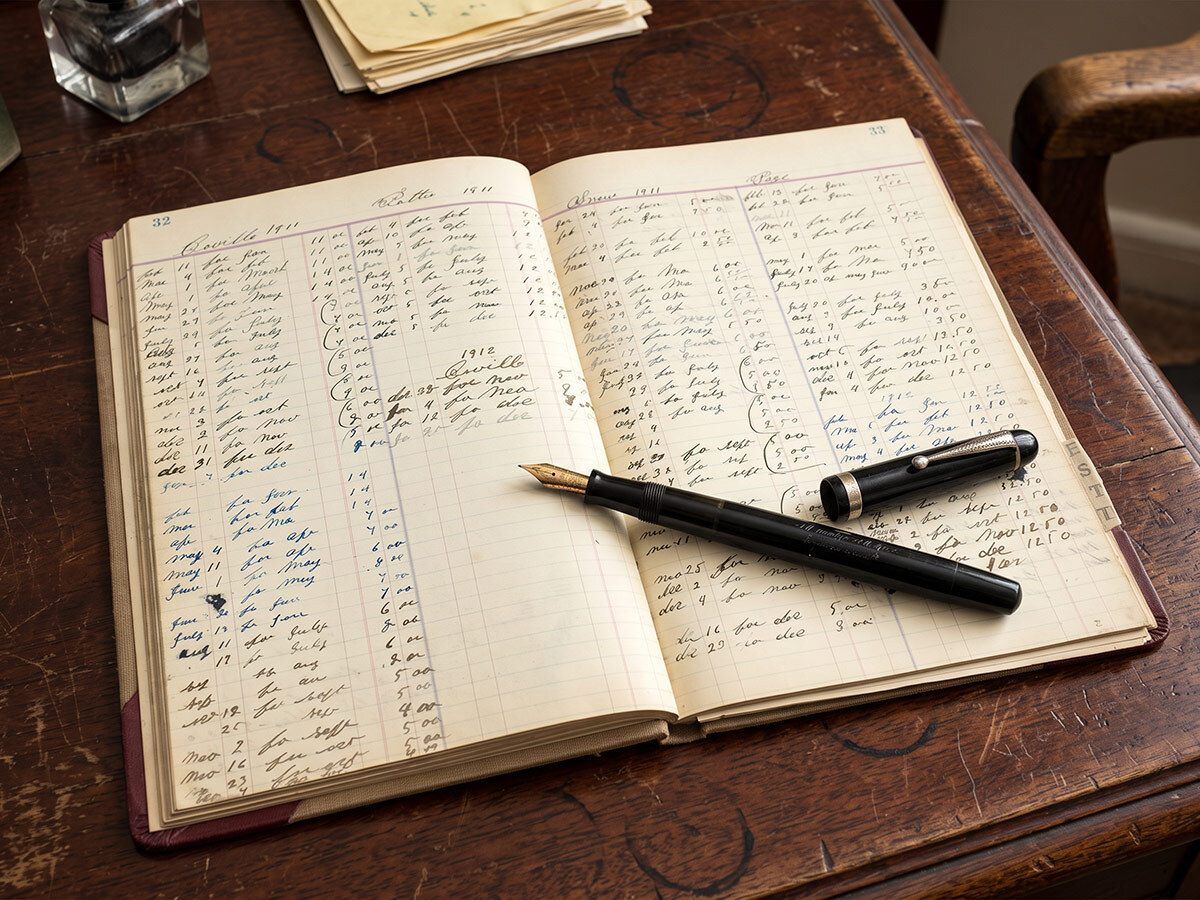 If you have ever wondered why so many Scandinavians seem to share so few surnames, the answer is that for most of their history they did not have surnames at all. A name was simply your father’s name with a suffix attached, regenerated fresh every generation. That is why a Danish Jensen and a Norwegian Jensen are almost certainly unrelated — and why roughly a third of Denmark still answers to one of ten names.
Do you know that your surname is Scandinavian but are not sure what that means? We’ve compiled a list of common names from different Scandinavian countries and what they mean.
When it comes to celebrating Scandinavia and where your surname comes from, Scandinavian Shoppe has a wide selection of Scandinavian products to help you reconnect with your heritage. Make sure you shop our Scandinavian products and learn a little more about Scandinavian history along the way.
Scandinavian Names
Scandinavian countries took some time to adopt the practice of inheriting family names. In fact, some countries still haven’t adopted this common western practice.
Instead, surnames were patronymic, which is where the first name of the father is taken and a suffix is added to the end. This is most commonly done to show that the person is the son or daughter of that name. For example, a common Scandinavian name like Hansen, where the -sen is the suffix, would literally mean son of Hans. But this practice varies slightly from country to country.
Denmark
In Denmark, it’s most common for names to end in -sen, meaning son. For example, someone with the last name Rasmussen would be the son of Rasmus.
Over the decades, the spelling of some names ending in -sen was changed to -son, but they still draw from that tradition of patronyms. This practice is so common that around one-third of the Danish population has one of the ten most common surnames, which include:
- Jensen
- Nielsen
- Hansen
- Pedersen
- Andersen
- Christensen
- Larsen
- Sorensen
- Rasmussen
- Jorgensen
Over time, less common names have been adopted to avoid these more popular surnames.
Norway
In Norway, surnames were also patronymic, but their suffixes varied. For son, the common suffixes were -ssen or -sson. For daughter, the suffixes could be -sdatter or -sdotter. The extra “s” gradually got dropped from the names.
Other popular names in Norway, however, originated as farm names. These types of names are known as toponyms because the surnames are derived from topographical features. Common examples include:
- Bakke/Bakken, meaning hill or rise
- Haugen/Haugan, meaning hill or mound
- Moen, meaning meadow
- Rud, meaning clearing
- Dahl/Dal, meaning valley
Gradually, Norwegian patronymic names are being lost in favor of toponyms.
Sweden
As in the other Scandinavian countries, patronymic names are the most common, and they end with the suffix -sson.
Like in Norway, there are also Swedish family names that derive from nature, much like the toponyms used in Norway:
- Lind, meaning linden tree — combined in names like Lindberg, linden and mountain
- Berg, meaning mountain — as in Bergkvist, mountain and twig
- Alstrom/Ahlstrom, meaning alder and stream
Interestingly enough, the Names Adoption Act was passed in 1901, which abolished this patronymic naming practice, requiring everyone to have a family name that passes from generation to generation.
Iceland
Unlike the other Scandinavian countries, Iceland continues to use its patronymic naming practice. Using the father’s (or mother’s) name, the suffix -son (for a son) or -dottir (for a daughter) is added to the end.
Celebrate Your Heritage With Scandinavian Products
Did you find any clues about your Scandinavian last name? If you’ve reconnected with your Scandinavian heritage, nothing celebrates that rich culture like Scandinavian products.
Whether you’re looking for a dala horse or something reminiscent of Viking lore, Scandinavian Shoppe has what you’re looking for. Learn more about common Scandinavian traditions and folklore while you browse our selection of Scandinavian products.